ESCAP developed a Smart e-Certificates Solution that automates bulk certificate issuance and one-click sharing on social media for training delivered outside existing learning platforms. The tool saves colleagues time, increases the visibility of learning activities and makes it easy to collect feedback and track course completions. An ESCAP-wide rollout is planned for early 2027.
#ESCAP
UNICEF launched two new AI tools to help staff leverage AI in everyday work, making it easier to discover organisational knowledge and tools: PHI, a secure AI-enabled workspace, and an AI project inventory.
#UNICEF
UNICC launched an internal AI Gateway that provides a common layer behind supported AI applications, so that teams can adopt AI more securely, consistently and cost-effectively. It applies UNICC’s policies, data sensitivity and operational requirements to every AI request, reducing costs, increasing flexibility and speeding up delivery of AI-enabled solutions across the organisation.
#UNICC
Ahead of the 2026 Plenipotentiary Conference, ITU developed the PP Assistant, providing delegates with AI-powered support through an Info Desk, document search capabilities and translation and editing tools, so that they can access information and participate more effectively.
#ITU
ITU’s transformation programme gives staff access to AI tools for their daily work, alongside dedicated time for learning, experimentation and the development of AI agents, some of which are being adopted across the organisation.
#ITU
UN - DPPA-DPO’s pilot of M365 Copilot found its strongest value in summarising, drafting, synthesising research and retrieving enterprise knowledge, helping staff preserve their time for analysis and decision-making. The pilot highlighted that scaling these benefits will require human oversight, responsible use, stronger information management, practical training and broader access to licences and agents for specific workflows.
#UN -DPPA DPO
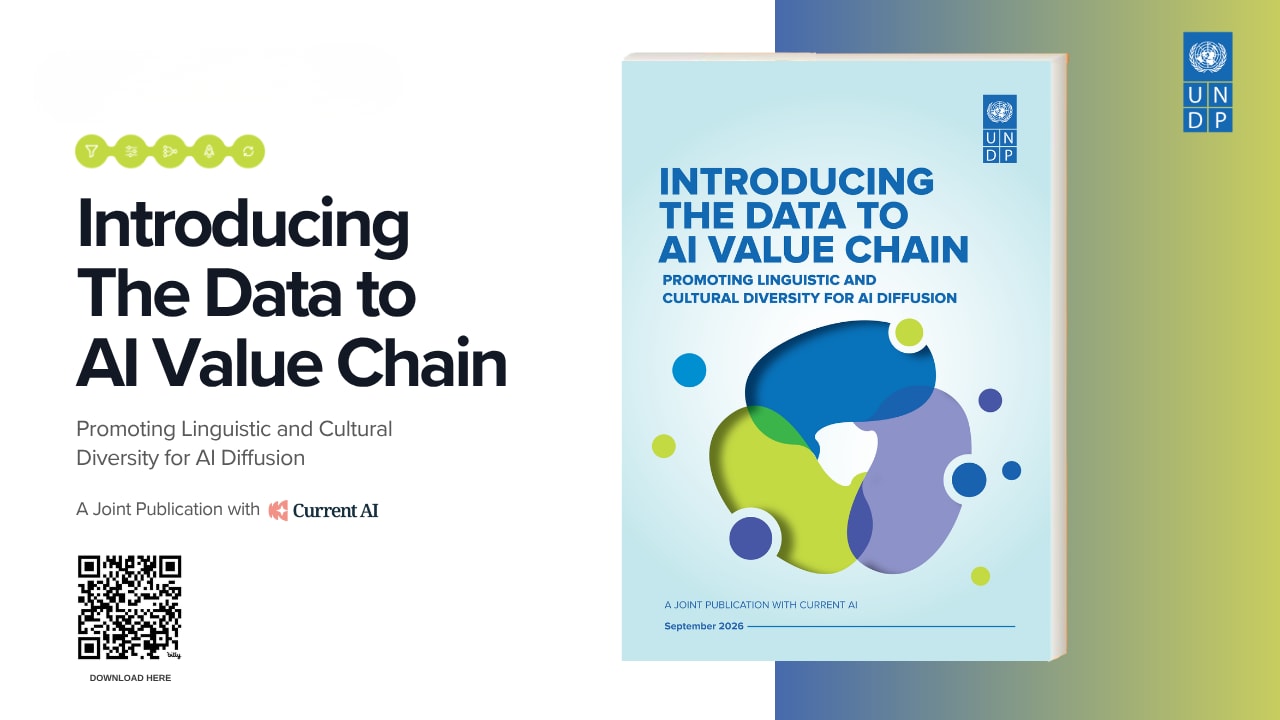
Image: UNDP’s Data to AI Value Chain: A new framework for AI that reflects the world’s languages and cultures.
Tools and Platforms
The UN System Data Commons brings together public data and statistics from 26 UN system entities in one AI-ready platform. With nearly 44 million data points available at launch, users can start with a question in plain language, without navigating multiple databases or knowing which UN entity holds which dataset. Built as part of the UN80 Initiative, the Data Commons helps policymakers, researchers, journalists and the general public turn evidence into action.
#EOSG
The UN - DPPA-DPO Peace and Security Data Hub is now linked to the new UN System Data Commons, providing access to authoritative peace and security datasets.
#UN - DPO
UNV launched an OpenAPI Data Platform that gives UN entities and partners a secure, consistent way to access approved UN Volunteer data. Users can download datasets in CSV or JSON files, through a web interface or use APIs to schedule feeds of encrypted data into their systems and dashboards. This replaces manual data requests and the need for special Power BI licences. Access is limited to authorised users through multifactor authentication and digital data-sharing agreements. For UNV, the service reduces manual requests and improves oversight of external data sharing. Its modular design allows new datasets and partner-specific requirements to be added at any time. Following security review and partner testing, the platform is operational and supports shared data and automation across the UN system.
#UNV
WIPO launched WIPO Meet, a conference management platform adapted from CERN’s open-source tool Indico. Deployed at the WIPO Assemblies in July, it begins to replace the scattered tools that teams and delegates used to rely on. WIPO put organisational change ahead of technology, adapting an existing solution instead of building a new one. WIPO Meet is the first step towards a Digital Secretariat, a single platform covering every part of conference management, from the first invitation to the last room booking.
#WIPO
UNFPA’s Independent Evaluation Office is using AI with human oversight to process 1,300+ documents for its census evaluations and 1,500+ documents across 15 countries for its humanitarian evaluations. Its internal Evaluation Assistant, launched in 2026, gives staff AI-supported access to evidence from around 300 UNFPA evaluations.
#UNFPA
ITU launched an AI-powered “Ask HR” assistant to help staff navigate rules, benefits and administrative processes. ITU is also using AI and digital solutions to streamline finance, procurement and document management, reducing administrative burdens and increasing efficiency.
#ITU
UN - DPO’s Digital Transformation Team ran digital workflow pilots with the Office of Military Affairs, the UN Mine Action Service and the substantive sections of the UN Mission in South Sudan (UNMISS), introducing automation across several data collection, reporting and analysis processes. The team also received 42 new challenges, including submissions from 10 peacekeeping missions, seeking support for digital solutioning. Monthly Innovation Moments sessions continue to connect HQ and field personnel to share proven approaches and emerging innovations.
#UN - DPO
ESCAP tackled lengthy, manual governance processes and hard-to-predict costs for digital solutions with its Digital Cockpit, where AI agents run pre-checks on global architecture, security and compliance, identify gaps, support remediation and prepare evidence. Global review teams receive a clear, pre-checked view of what has been assessed and addressed, without replacing their formal approval. The Cockpit also estimates build costs from software development activity and code commits and tracks AI and cloud consumption for each solution. This approach could help other UN entities govern, measure and scale digital innovation.
#ESCAP
UPU proposed a voluntary, risk-based framework for safe AI use in the postal sector, keeping high-impact decisions under human control (open to partners’ input).
#UPU
23 ITCILO staff co-created a Manifesto on Emerging Technologies for Social Justice after a six-month journey exploring AI, virtual reality, quantum computing and neurotechnologies. Its five commitments range from keeping humans at the centre to strengthening institutional readiness. The participatory methodology is now available to other organisations.
#ITCILO
A new report by UNU’s Institute for Water, Environment and Health, Environmental Cost of Artificial Intelligence: Carbon, Water and Land Footprints, moved beyond the field’s usual carbon-only focus, quantifying AI’s carbon, water and land footprints together at scale. Its findings prompted the UN Secretary-General to launch an AI Environmental Transparency Initiative, calling on AI companies to disclose their environmental impact.
#UNU
UNDP’s report Every Language Matters, building on two years of its Local Language Accelerator, introduced the Data-to-AI Value Chain, a five-stage framework for overcoming barriers to language-inclusive AI, from data collection to deployment.
#UNDP
UNDP’s Small States, Big Signals report found that many of the most consequential AI governance decisions are made outside formal policy, in procurement, vendor contracts and software updates in 11 countries and territories. Governance, it argues, needs to be built into everyday operations.
#UNDP
Drawing on 26 UNDP AI Landscape Assessments completed since 2024, UNDP’s Reading AI Readiness Backwards examines what AI readiness means once adoption is already entering public institutions, markets, digital systems and everyday services.
#UNDP
In June 2026, UN Open Source Week brought together 1,400 participants from 123 countries (up 40% from 2025). Co-organised by UN - OICT and UN - ODET, the week explored the role of open source in AI, digital public infrastructure and digital innovation through 64 technical sessions, dialogues and networking events featuring 270+ speakers. The week highlighted how openness, collaboration and shared knowledge can strengthen digital cooperation and support a more inclusive and sustainable digital future.
#UN - oict
The third UN Virtual Worlds Day, convened by ITU with some 20 UN entities, focused on “AI, Spatial Intelligence and the Citiverse: Shaping Trusted Digital Futures”. Participants explored how AI, immersive virtual environments and spatial intelligence are reshaping urban governance and public services, and how the Global Digital Compact can deliver trusted, inclusive and people-centred outcomes for cities and communities. At the event, an Executive Briefing on AI, Spatial Intelligence and the AI-Enabled Citiverse, developed with contributions from 20 UN entities, was launched.
#ITU
The AI for Good Global Summit 2026 convened 12,000+ leaders, researchers, industry experts and UN partners from more than 169 countries to advance practical AI solutions, skills and standards. Save the date for next year: 21–24 June 2027, Geneva, Switzerland.
#itu
ITCILO is looking for partners for Reconnecting Futures, which treats living knowledge traditions as foundations for future learning and education systems, not only as heritage to preserve. The aim is to co-design alternatives to extractive AI adoption approaches which take knowledge and data from communities in the Global South, so that communities have more say over their knowledge, data and futures.
#ITCILO
Image (Top): Call for partners: ITCILO’s Reconnecting Futures explores how local knowledge traditions can guide AI in education
Image (Below): UNFPA’s evaluation of its support to the 2020 census round used AI, with human oversight, to review more than 1,300 documents across 160 countries and territories. UNFPA/Santiago Arcos
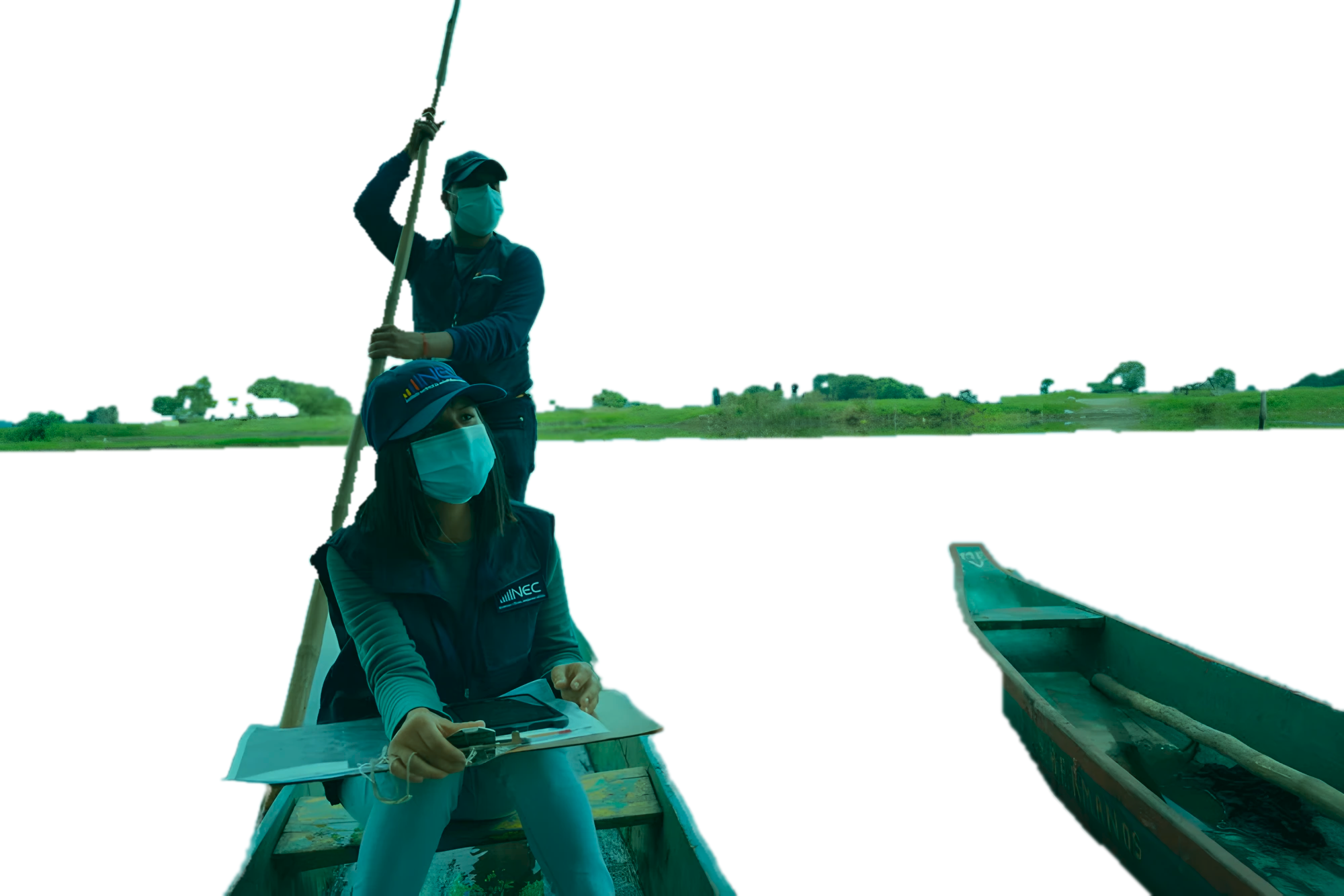

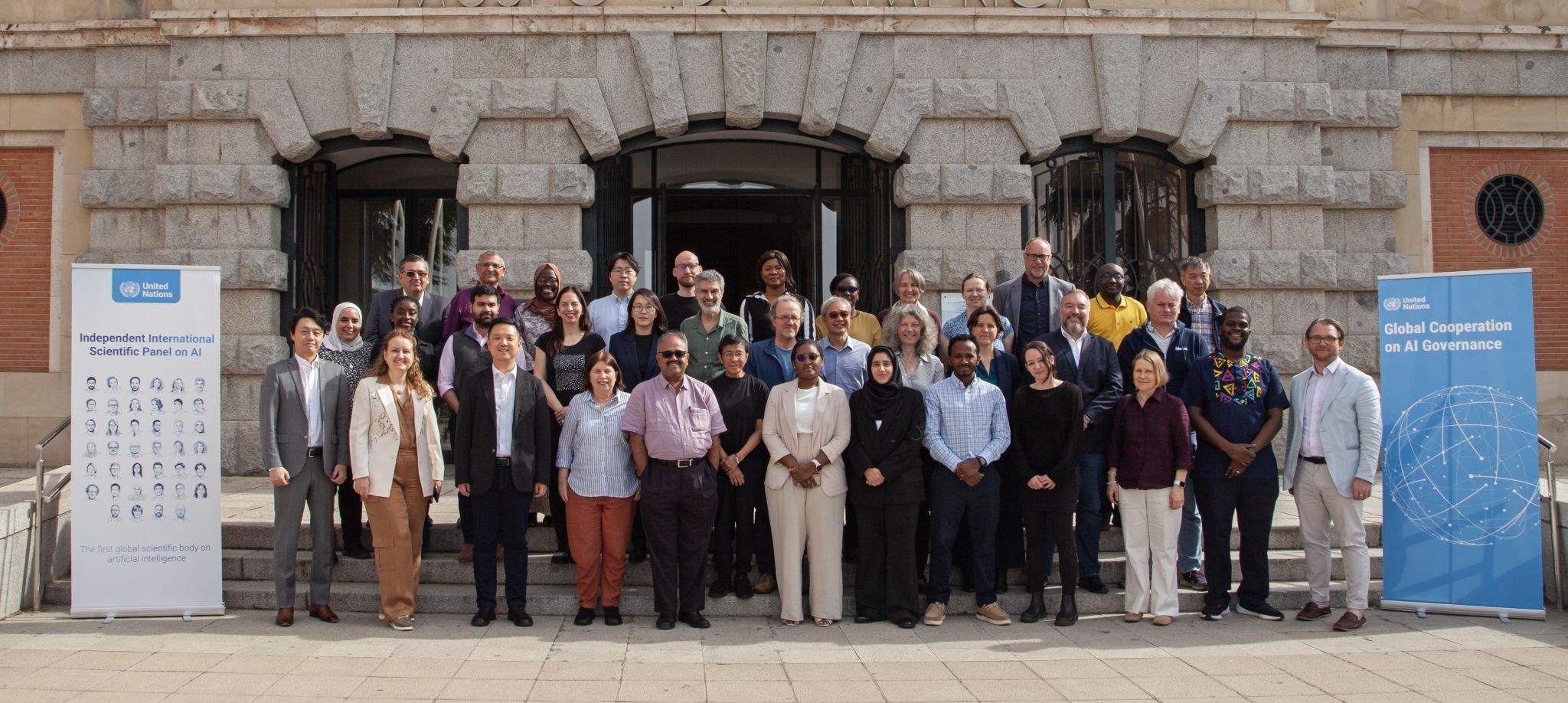
Image: The UN’s Independent International Scientific Panel on AI, the first global scientific body on AI, provides evidence-based assessments to guide international decisions on AI.
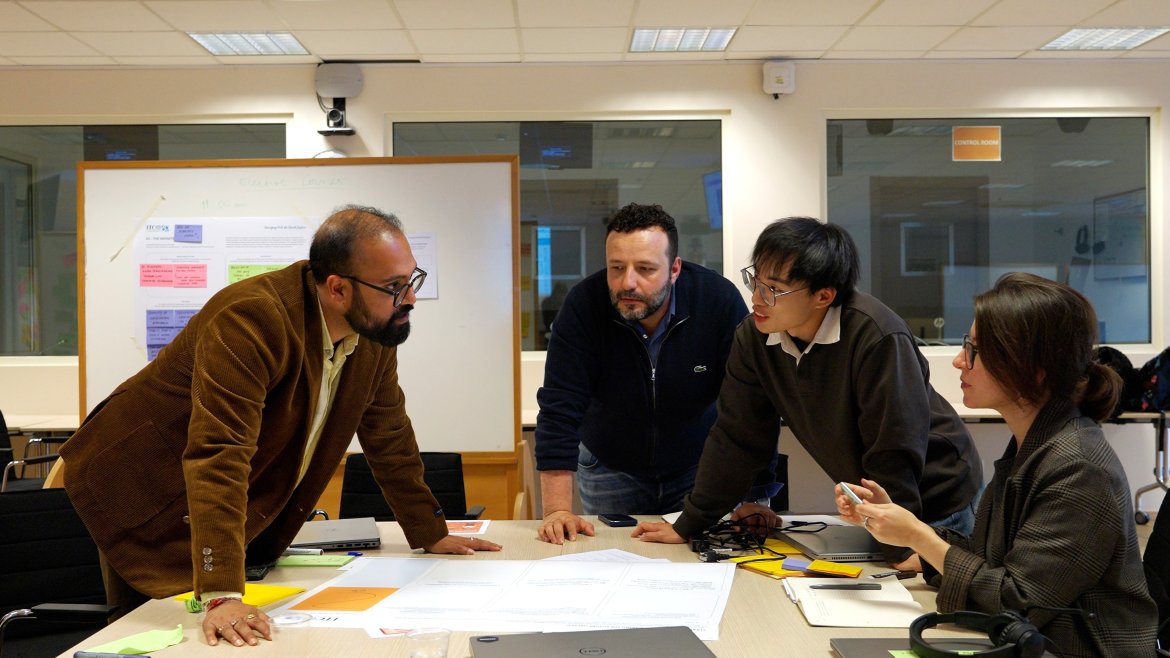
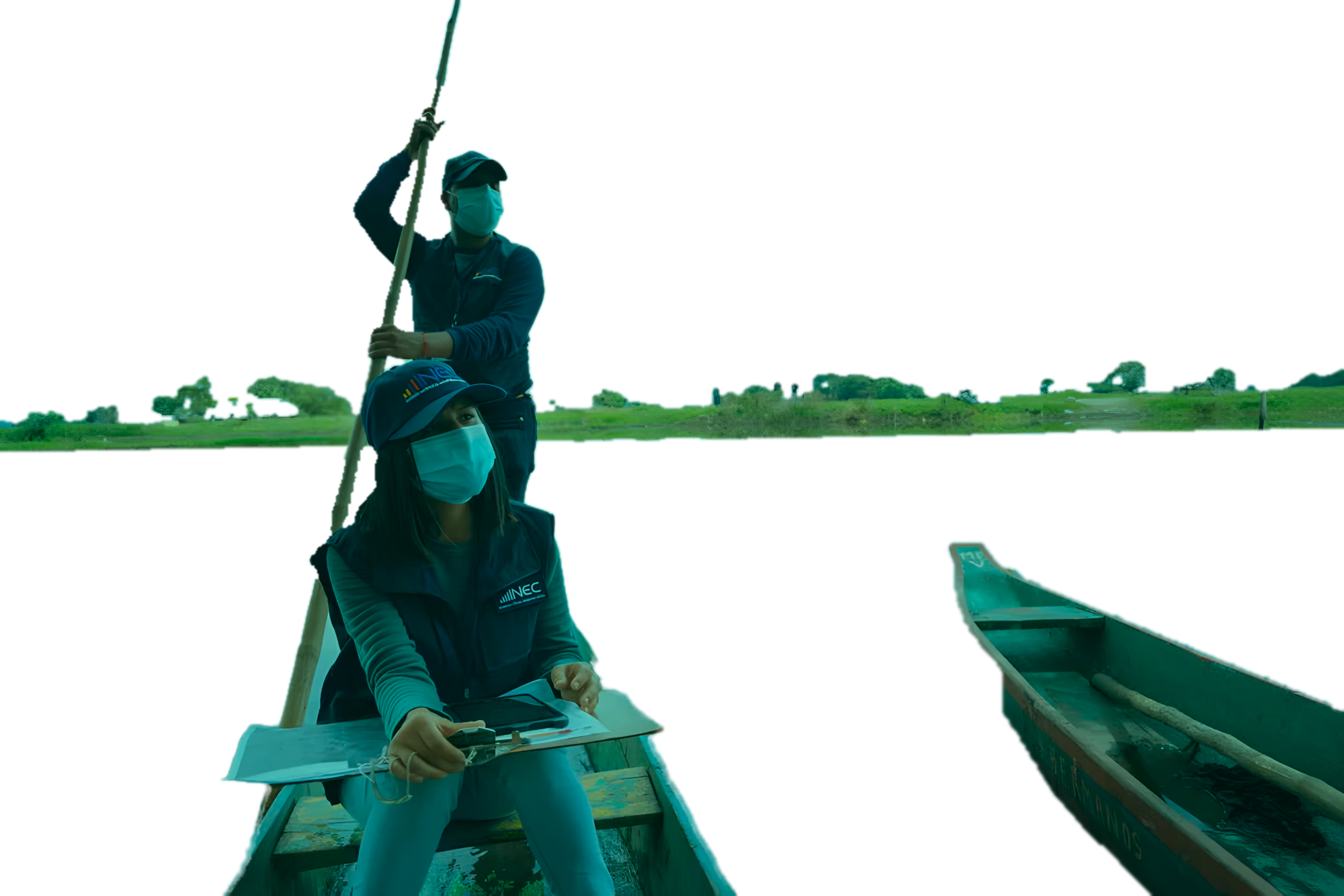
ITCILO co-creating a Manifesto on Emerging Technologies for Social Justice, a six-month process exploring AI, virtual reality, quantum computing and neurotechnologies.
UN - ODET launched the UN Blueprint for National AI Strategies, with Lesotho and Guinea, showing how national ambition can translate into practical implementation.
#UN - ODET
At its autumn session, the High-level Committee on Management (HLCM) agreed to develop a common UN AI Readiness, Preparedness and Resilience Framework, placing AI readiness firmly on the UN system's management agenda. The framework will provide organisations with a shared reference point across governance, strategy, workforce capabilities, data, technology foundations, risk management and procurement. A tabletop exercise, developed with the Windfall Trust, immersed leaders in a simulated AI crisis, surfacing practical challenges related to accountability, vendor dependence, data protection, operational continuity and rapid decision-making while highlighting the value of stronger preparedness and pooled expertise across the system. An ad hoc HLCM Task Team will take the work forward, helping identify common gaps, priorities and opportunities for collaboration while recognising organisations' different mandates, operating models and levels of AI maturity.
#HLCM
ECLAC introduced a suite of AI governance tools to help Caribbean governments design national AI strategies and responsibly adopt artificial intelligence in the public sector. Through its Digital Transformation Laboratory (DLAB), countries can test AI applications and regulatory approaches in controlled environments before implementation, helping policymakers navigate the opportunities and risks of emerging technologies.
#ECLAC
In July, UNICC and EPFL, with support from ICAIN, published a white paper presenting a practical framework for evaluating large language models (LLMs), to support their safe, reliable and responsible use in institutional settings. UNICC and EPFL followed a structured approach to assessing how Apertus, an open-source LLM developed by the Swiss AI Initiative, behaves in a real institutional deployment, including its resistance to harmful prompts and its ability to recognise when it should not answer. The resulting framework can be adapted by the UN system and other organisations to assess the safety of their own AI systems.
#UNICC
Adopted at the UN Tourism General Assembly, the Riyadh Declaration promotes responsible, inclusive AI in tourism through capacity building, innovation, investment and international cooperation.
#UN TOURISM
UN - ODET convened the second annual Digital Cooperation Day during the High-Level Week of UNGA81 under the theme “Shaping a Global AI Future Through Science, Policy, and Capacity”. The day marked the launch of the first thematic brief of the Independent International Scientific Panel on Artificial Intelligence: AI Agents, Misalignment and the Risk of Losing Human Control. Drawing on the recent OpenAI–Hugging Face incident, the brief examines how to maintain human control as AI systems become more capable and autonomous.
#UN - ODET
Image: The UN’s Independent International Scientific Panel on AI. The first global scientific body on AI, that provides evidence-based assessments to guide international decisions on AI.
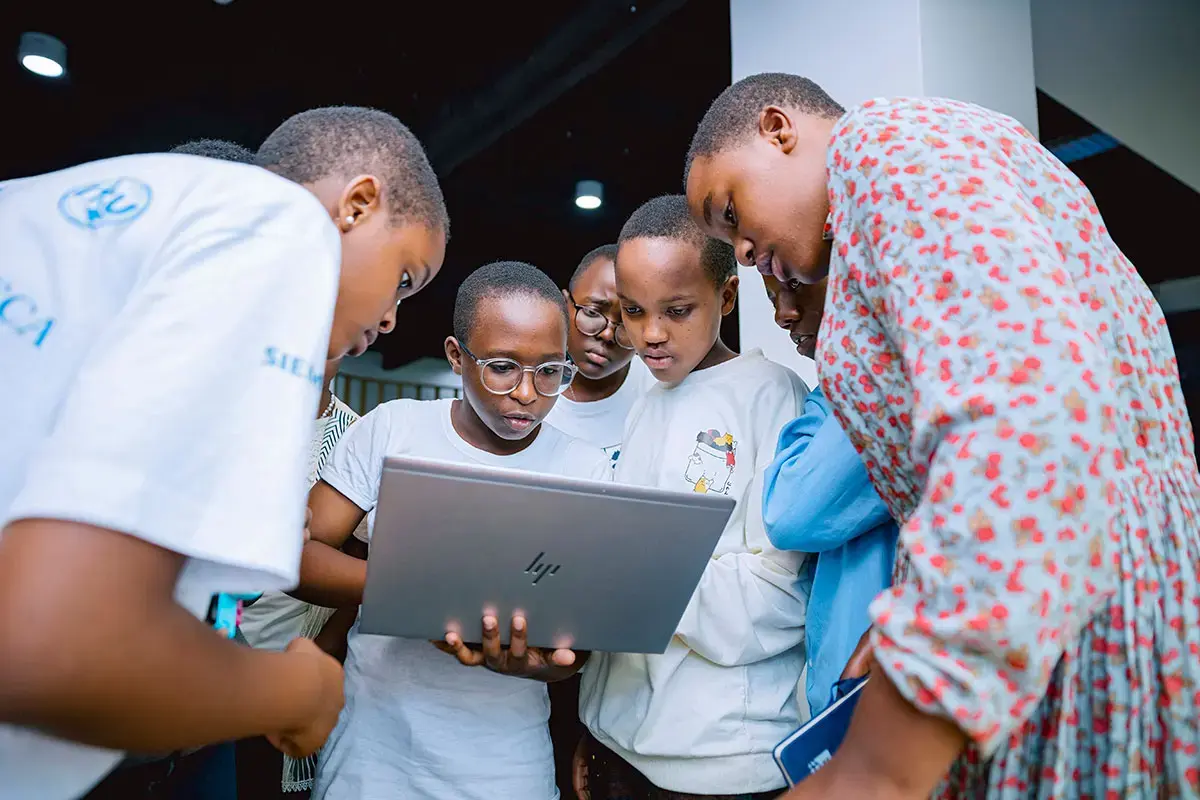
This section spotlights the digital, data and AI capabilities helping UN entities to more effectively and responsibly make decisions, deliver services and scale innovation.
DIGITAL, DATA & AI ENABLERS

AI and emerging technologies


Video:Introducing PHI, a new digital solution from UNICEF Digital Impact.


‣
ESCAP developed a Smart e-Certificates Solution that automates bulk certificate issuance and one-click sharing on social media for training delivered outside existing learning platforms. The tool saves colleagues time, increases the visibility of learning activities and makes it easy to collect feedback and track course completions. An ESCAP-wide rollout is planned for early 2027.
#ESCAP
‣
UNICEF launched two new AI tools to help staff leverage AI in everyday work, making it easier to discover organisational knowledge and tools: PHI, a secure AI-enabled workspace, and an AI project inventory.
#UNICEF
‣
UNICC launched an internal AI Gateway that provides a common layer behind supported AI applications, so that teams can adopt AI more securely, consistently and cost-effectively. It applies UNICC’s policies, data sensitivity and operational requirements to every AI request, reducing costs, increasing flexibility and speeding up delivery of AI-enabled solutions across the organisation.
#UNICC
‣
Ahead of the 2026 Plenipotentiary Conference, ITU developed the PP Assistant, providing delegates with AI-powered support through an Info Desk, document search capabilities and translation and editing tools, so that they can access information and participate more effectively.
#ITU
‣
ITU’s transformation programme gives staff access to AI tools for their daily work, alongside dedicated time for learning, experimentation and the development of AI agents, some of which are being adopted across the organisation.
#ITU
‣
UN - DPPA-DPO’s pilot of M365 Copilot found its strongest value in summarising, drafting, synthesising research and retrieving enterprise knowledge, helping staff preserve their time for analysis and decision-making. The pilot highlighted that scaling these benefits will require human oversight, responsible use, stronger information management, practical training and broader access to licences and agents for specific workflows.
#UN - DPO
Image: UNDP’s Data to AI Value Chain: A new framework for AI that reflects the world’s languages and cultures.
Tools and Platforms
‣
The UN System Data Commons brings together public data and statistics from 26 UN system entities in one AI-ready platform. With nearly 44 million data points available at launch, users can start with a question in plain language, without navigating multiple databases or knowing which UN entity holds which dataset. Built as part of the UN80 Initiative, the Data Commons helps policymakers, researchers, journalists and the general public turn evidence into action.
#EOSG
‣
The UN - DPPA-DPO Peace and Security Data Hub is now linked to the new UN System Data Commons, providing access to authoritative peace and security datasets.
#UN - DPO
‣
UNV launched an OpenAPI Data Platform that gives UN entities and partners a secure, consistent way to access approved UN Volunteer data. Users can download datasets in CSV or JSON files, through a web interface or use APIs to schedule feeds of encrypted data into their systems and dashboards. This replaces manual data requests and the need for special Power BI licences. Access is limited to authorised users through multifactor authentication and digital data-sharing agreements. For UNV, the service reduces manual requests and improves oversight of external data sharing. Its modular design allows new datasets and partner-specific requirements to be added at any time. Following security review and partner testing, the platform is operational and supports shared data and automation across the UN system.
#UNV
‣
WIPO launched WIPO Meet, a conference management platform adapted from CERN’s open-source tool Indico. Deployed at the WIPO Assemblies in July, it begins to replace the scattered tools that teams and delegates used to rely on. WIPO put organisational change ahead of technology, adapting an existing solution instead of building a new one. WIPO Meet is the first step towards a Digital Secretariat, a single platform covering every part of conference management, from the first invitation to the last room booking.
#WIPO
‣
UNFPA’s Independent Evaluation Office is using AI with human oversight to process 1,300+ documents for its census evaluations and 1,500+ documents across 15 countries for its humanitarian evaluations. Its internal Evaluation Assistant, launched in 2026, gives staff AI-supported access to evidence from around 300 UNFPA evaluations.
#UNFPA
‣
ITU launched an AI-powered “Ask HR” assistant to help staff navigate rules, benefits and administrative processes. ITU is also using AI and digital solutions to streamline finance, procurement and document management, reducing administrative burdens and increasing efficiency.
#ITU
‣
UN - DPO’s Digital Transformation Team ran digital workflow pilots with the Office of Military Affairs, the UN Mine Action Service and the substantive sections of the UN Mission in South Sudan (UNMISS), introducing automation across several data collection, reporting and analysis processes. The team also received 42 new challenges, including submissions from 10 peacekeeping missions, seeking support for digital solutioning. Monthly Innovation Moments sessions continue to connect HQ and field personnel to share proven approaches and emerging innovations.
#UN - DPO
‣
ESCAP tackled lengthy, manual governance processes and hard-to-predict costs for digital solutions with its Digital Cockpit, where AI agents run pre-checks on global architecture, security and compliance, identify gaps, support remediation and prepare evidence. Global review teams receive a clear, pre-checked view of what has been assessed and addressed, without replacing their formal approval. The Cockpit also estimates build costs from software development activity and code commits and tracks AI and cloud consumption for each solution. This approach could help other UN entities govern, measure and scale digital innovation.
#ESCAP
Video:Introducing PHI, a new digital solution from UNICEF Digital Impact.

‣
UPU proposed a voluntary, risk-based framework for safe AI use in the postal sector, keeping high-impact decisions under human control (open to partners’ input).
#UPU
‣
23 ITCILO staff co-created a Manifesto on Emerging Technologies for Social Justice after a six-month journey exploring AI, virtual reality, quantum computing and neurotechnologies. Its five commitments range from keeping humans at the centre to strengthening institutional readiness. The participatory methodology is now available to other organisations.
#ITCILO
‣
A new report by UNU’s Institute for Water, Environment and Health, Environmental Cost of Artificial Intelligence: Carbon, Water and Land Footprints, moved beyond the field’s usual carbon-only focus, quantifying AI’s carbon, water and land footprints together at scale. Its findings prompted the UN Secretary-General to launch an AI Environmental Transparency Initiative, calling on AI companies to disclose their environmental impact.
#UNU
‣
UNDP’s report Every Language Matters, building on two years of its Local Language Accelerator, introduced the Data-to-AI Value Chain, a five-stage framework for overcoming barriers to language-inclusive AI, from data collection to deployment.
#UNDP
‣
UNDP’s Small States, Big Signals report found that many of the most consequential AI governance decisions are made outside formal policy, in procurement, vendor contracts and software updates in 11 countries and territories. Governance, it argues, needs to be built into everyday operations.
#UNDP
‣
Drawing on 26 UNDP AI Landscape Assessments completed since 2024, UNDP’s Reading AI Readiness Backwards examines what AI readiness means once adoption is already entering public institutions, markets, digital systems and everyday services.
#UNDP
‣
In June 2026, UN Open Source Week brought together 1,400 participants from 123 countries (up 40% from 2025). Co-organised by UN - OICT and UN - ODET, the week explored the role of open source in AI, digital public infrastructure and digital innovation through 64 technical sessions, dialogues and networking events featuring 270+ speakers. The week highlighted how openness, collaboration and shared knowledge can strengthen digital cooperation and support a more inclusive and sustainable digital future.
#UN - oict
‣
The third UN Virtual Worlds Day, convened by ITU with some 20 UN entities, focused on “AI, Spatial Intelligence and the Citiverse: Shaping Trusted Digital Futures”. Participants explored how AI, immersive virtual environments and spatial intelligence are reshaping urban governance and public services, and how the Global Digital Compact can deliver trusted, inclusive and people-centred outcomes for cities and communities. At the event, an Executive Briefing on AI, Spatial Intelligence and the AI-Enabled Citiverse, developed with contributions from 20 UN entities, was launched.
#ITU
‣
The AI for Good Global Summit 2026 convened 12,000+ leaders, researchers, industry experts and UN partners from more than 169 countries to advance practical AI solutions, skills and standards. Save the date for next year: 21–24 June 2027, Geneva, Switzerland.
#itu
‣
ITCILO is looking for partners for Reconnecting Futures, which treats living knowledge traditions as foundations for future learning and education systems, not only as heritage to preserve. The aim is to co-design alternatives to extractive AI adoption approaches which take knowledge and data from communities in the Global South, so that communities have more say over their knowledge, data and futures.
#ITCILO
Image (Top): Call for partners: ITCILO’s Reconnecting Futures explores how local knowledge traditions can guide AI in education
Image (Below): UNFPA’s evaluation of its support to the 2020 census round used AI, with human oversight, to review more than 1,300 documents across 160 countries and territories. UNFPA/Santiago Arcos
ITCILO co-creating a Manifesto on Emerging Technologies for Social Justice, a six-month process exploring AI, virtual reality, quantum computing and neurotechnologies.
AI and emerging technologies
‣
UN - ODET launched the UN Blueprint for National AI Strategies, with Lesotho and Guinea, showing how national ambition can translate into practical implementation.
#UN - ODET
‣
At its autumn session, the High-level Committee on Management (HLCM) agreed to develop a common UN AI Readiness, Preparedness and Resilience Framework, placing AI readiness firmly on the UN system's management agenda. The framework will provide organisations with a shared reference point across governance, strategy, workforce capabilities, data, technology foundations, risk management and procurement. A tabletop exercise, developed with the Windfall Trust, immersed leaders in a simulated AI crisis, surfacing practical challenges related to accountability, vendor dependence, data protection, operational continuity and rapid decision-making while highlighting the value of stronger preparedness and pooled expertise across the system. An ad hoc HLCM Task Team will take the work forward, helping identify common gaps, priorities and opportunities for collaboration while recognising organisations' different mandates, operating models and levels of AI maturity.
#HLCM
‣
ECLAC introduced a suite of AI governance tools to help Caribbean governments design national AI strategies and responsibly adopt artificial intelligence in the public sector. Through its Digital Transformation Laboratory (DLAB), countries can test AI applications and regulatory approaches in controlled environments before implementation, helping policymakers navigate the opportunities and risks of emerging technologies.
#ECLAC
‣
In July, UNICC and EPFL, with support from ICAIN, published a white paper presenting a practical framework for evaluating large language models (LLMs), to support their safe, reliable and responsible use in institutional settings. UNICC and EPFL followed a structured approach to assessing how Apertus, an open-source LLM developed by the Swiss AI Initiative, behaves in a real institutional deployment, including its resistance to harmful prompts and its ability to recognise when it should not answer. The resulting framework can be adapted by the UN system and other organisations to assess the safety of their own AI systems.
#UNICC
‣
Adopted at the UN Tourism General Assembly, the Riyadh Declaration promotes responsible, inclusive AI in tourism through capacity building, innovation, investment and international cooperation.
#UN TOURISM
‣
UN - ODET convened the second annual Digital Cooperation Day during the High-Level Week of UNGA81 under the theme “Shaping a Global AI Future Through Science, Policy, and Capacity”. The day marked the launch of the first thematic brief of the Independent International Scientific Panel on Artificial Intelligence: AI Agents, Misalignment and the Risk of Losing Human Control. Drawing on the recent OpenAI–Hugging Face incident, the brief examines how to maintain human control as AI systems become more capable and autonomous.
#UN - ODET
Image: The UN’s Independent International Scientific Panel on AI. The first global scientific body on AI, that provides evidence-based assessments to guide international decisions on AI.
This section spotlights the digital, data and AI capabilities helping UN entities to more effectively and responsibly make decisions, deliver services and scale innovation.

DIGITAL, DATA & AI ENABLERS